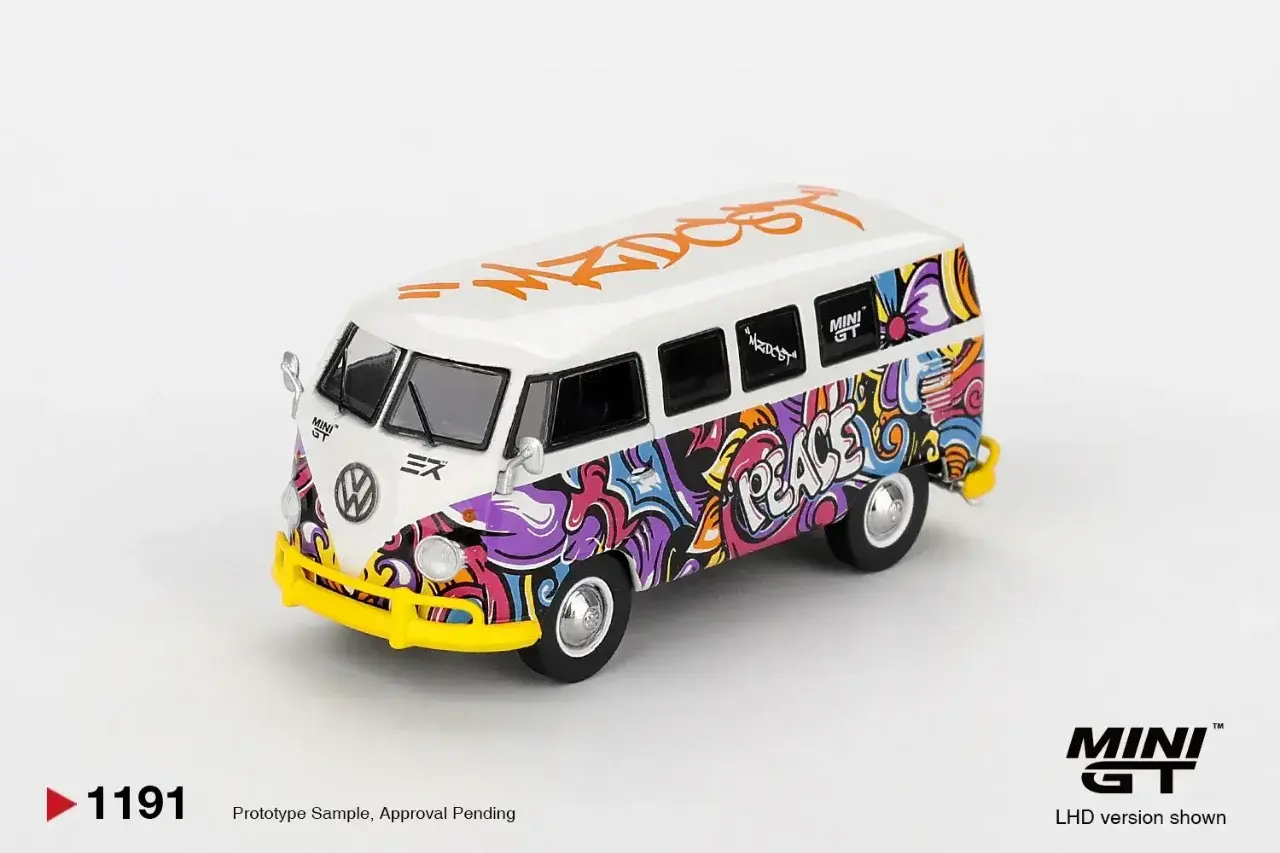
Volkswagen
Volkswagen Type 2 (T1)
Born from a 1947 doodle by Dutch importer Ben Pon, the T1 Type 2 entered production in 1950 and became one of the most recognizable vehicles in the world.
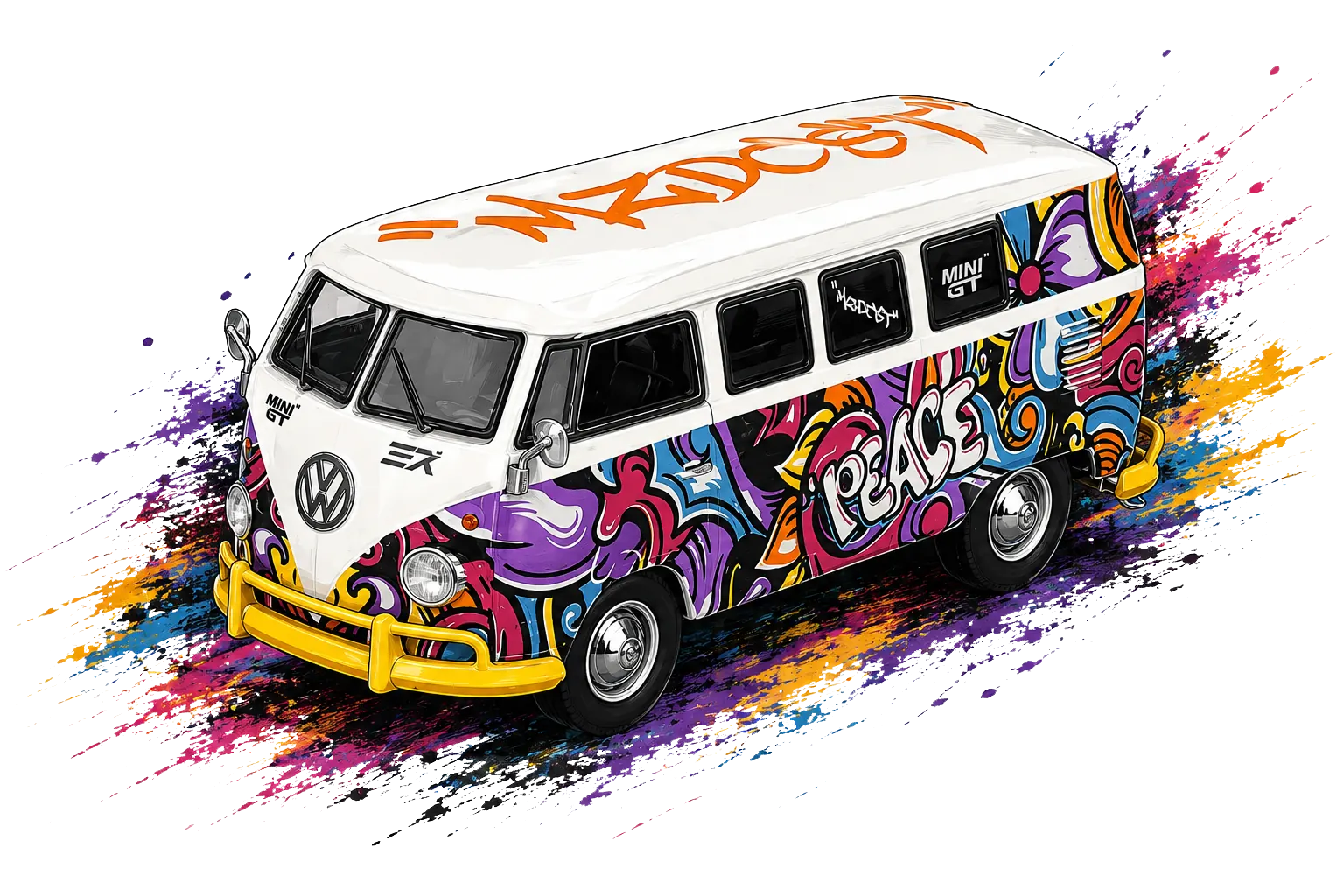
The idea came from Ben Pon, Volkswagen's importer in the Netherlands, who sketched a van on the Beetle's base in a doodle dated April 23, 1947, now on display at the Rijksmuseum in Amsterdam. Production of the first generation, the T1, began on March 8, 1950 and lasted in Germany until the 1967 model year. Officially it was the Type 2 (the Beetle was the Type 1); the name Kombi comes from Kombinationskraftwagen, a “combination vehicle” for people and cargo.
The most luxurious version, the Samba, went into production in 1951 and became famous for its windows: 23 at first, later 21, including small roof windows. In the 1960s and 1970s, cheap, easy to fix and roomy enough for a whole group, the bus became a counterculture symbol, earned the “hippie van” nickname and was everywhere at Woodstock in 1969.
In Brazil, the story ran longer than anywhere else. Assembly began in 1953, the T1 front stayed in production until 1975 and, from 1976, the version derived from the second generation kept going until December 31, 2013, when airbag and ABS requirements ended the model's career. At Kaido House, the T1 got lowered, tuned versions such as the Kaido Works.
- Kombi comes from the German Kombinationskraftwagen, a combination vehicle for passengers and cargo.
- Ben Pon's original 1947 doodle is in the collection of the Rijksmuseum in Amsterdam.
- The Samba had as many as 23 windows, counting the small roof windows.
- The last Brazilian Kombi was built in December 2013.
Volkswagen Type 2 (T1) in the catalog
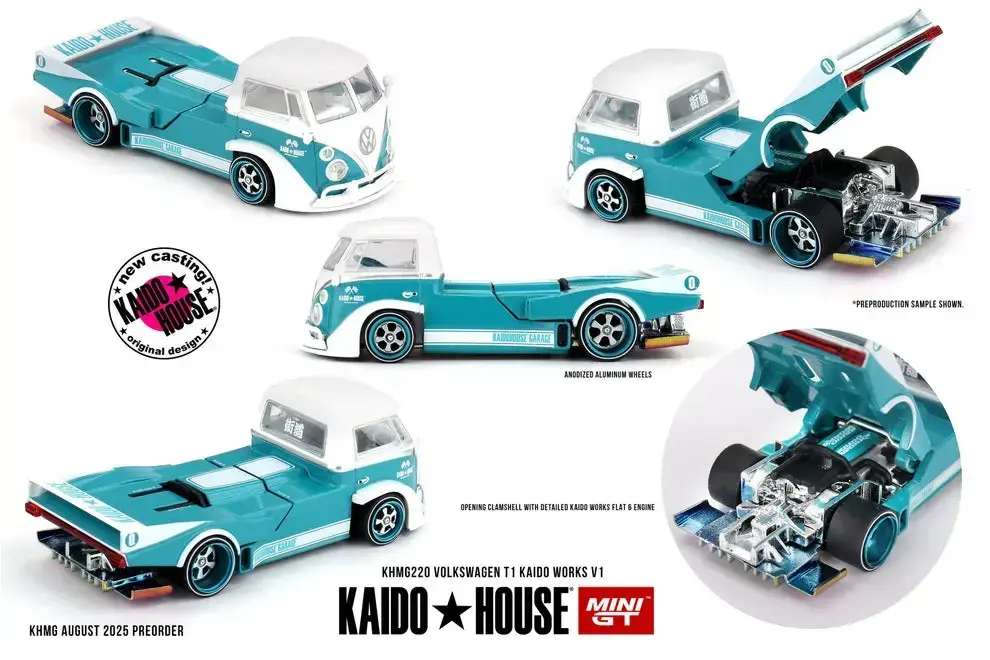
Volkswagen T1 KAIDO WORKS V1
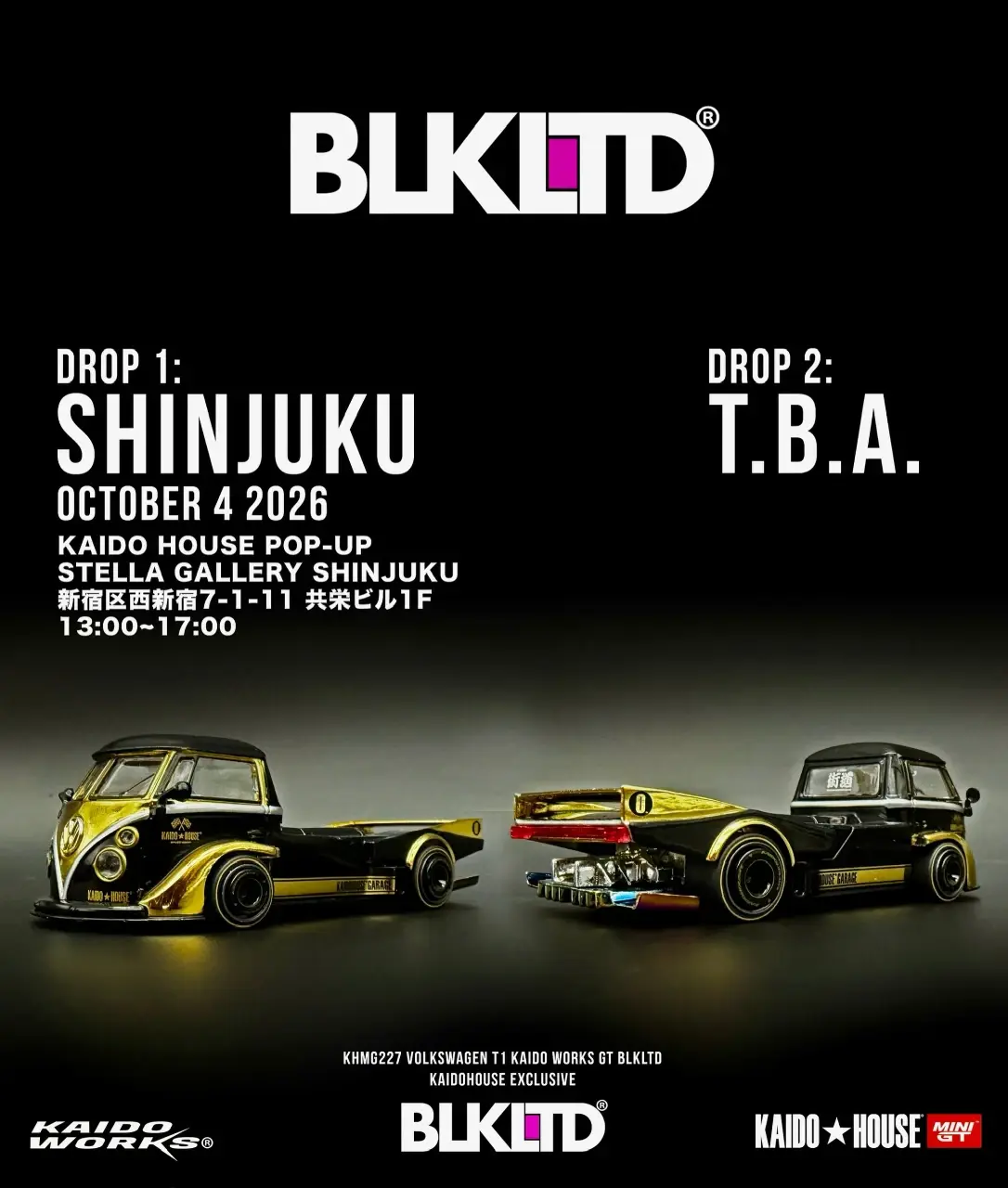
Volkswagem T1 Kaido Works GT BLKLTD
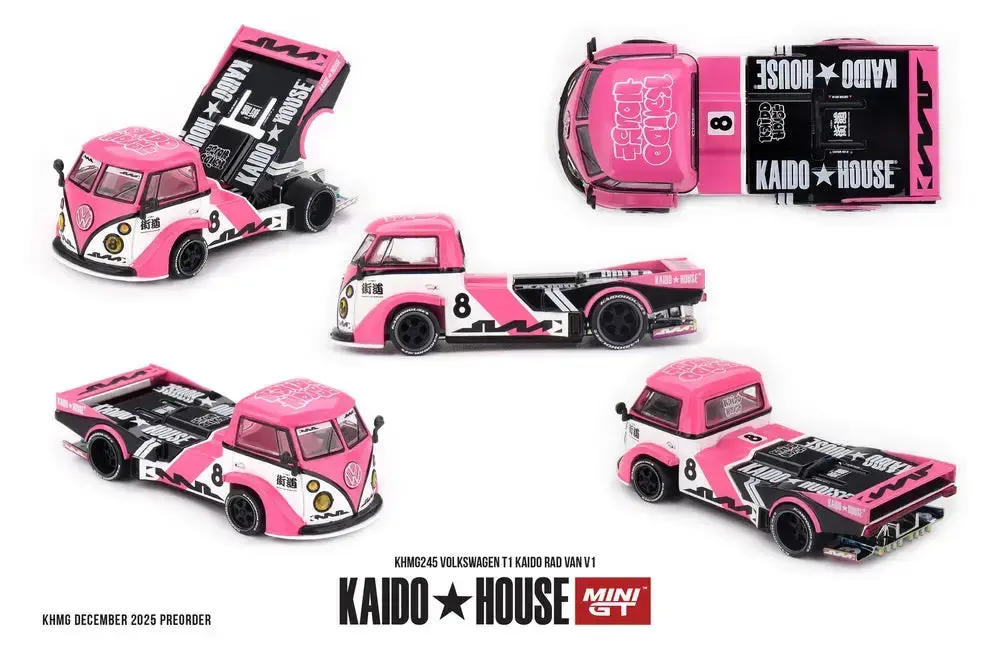
Volkswagen T1 KAIDO RAD VAN V1
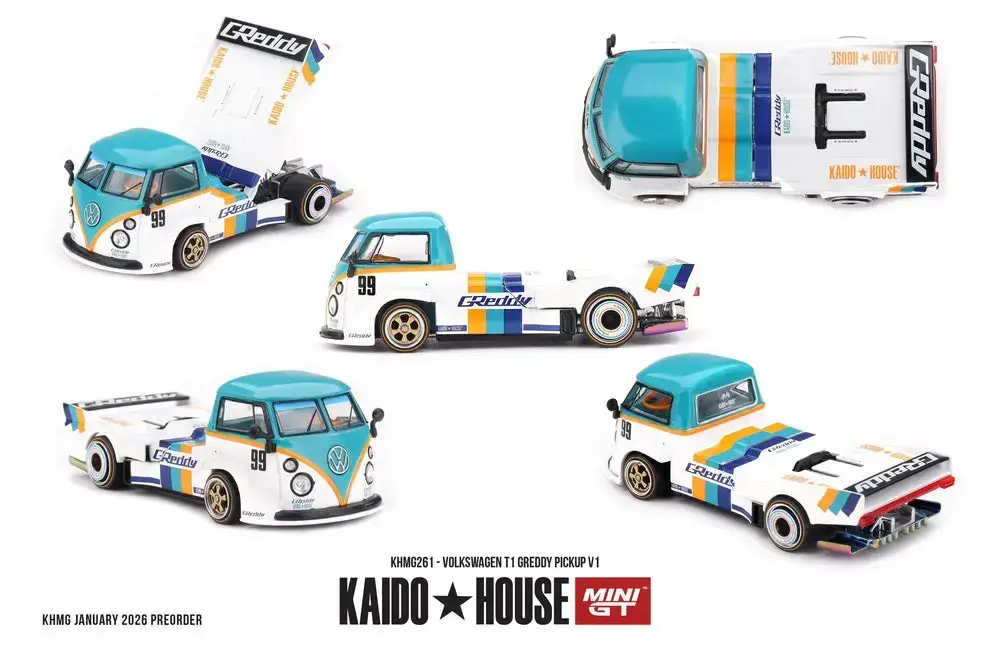
Volkswagen T1 GReddy Pickup V1
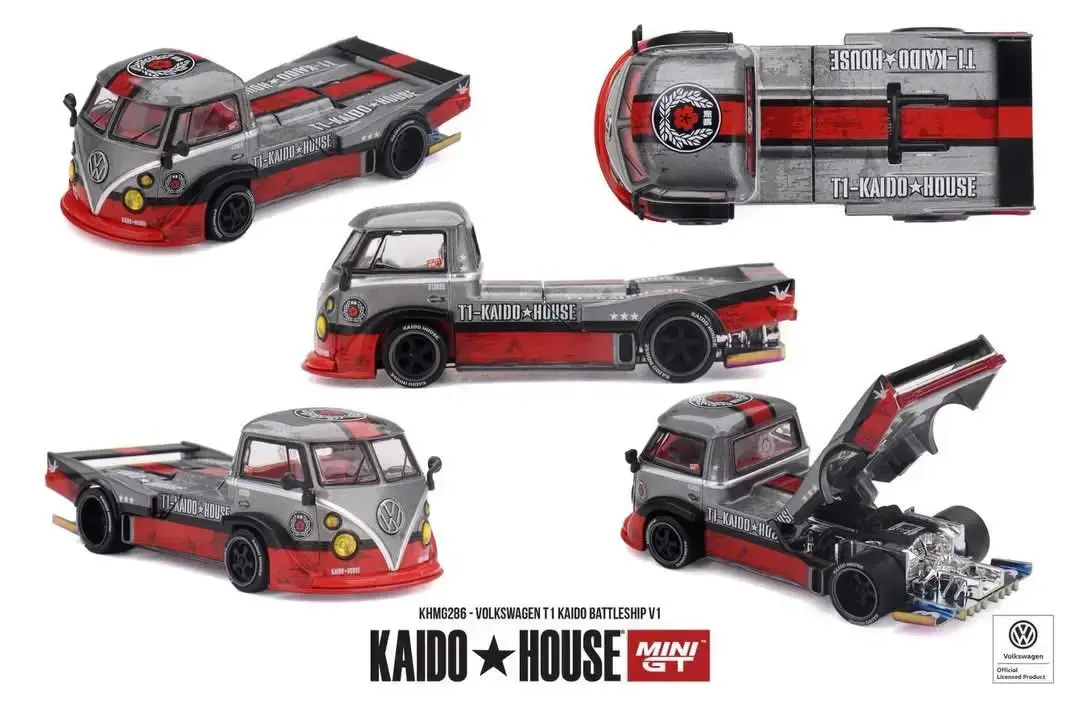
Volkswagen T1 Kaido Battleship V1
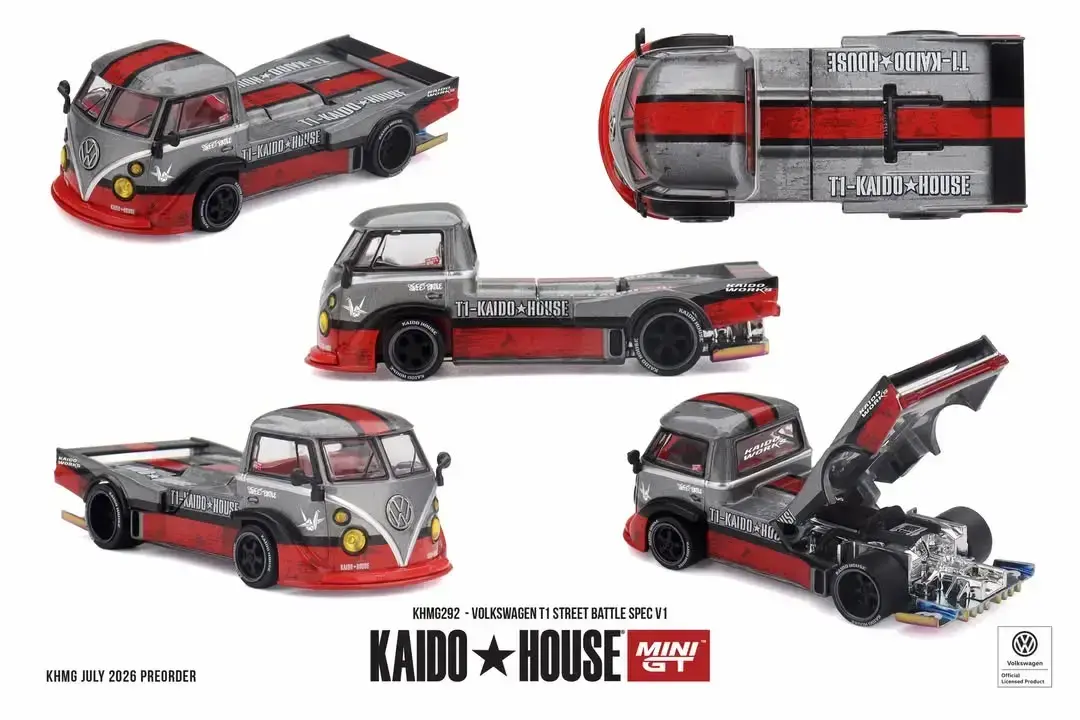
Volkswagen T1 Street Battle Spec V1
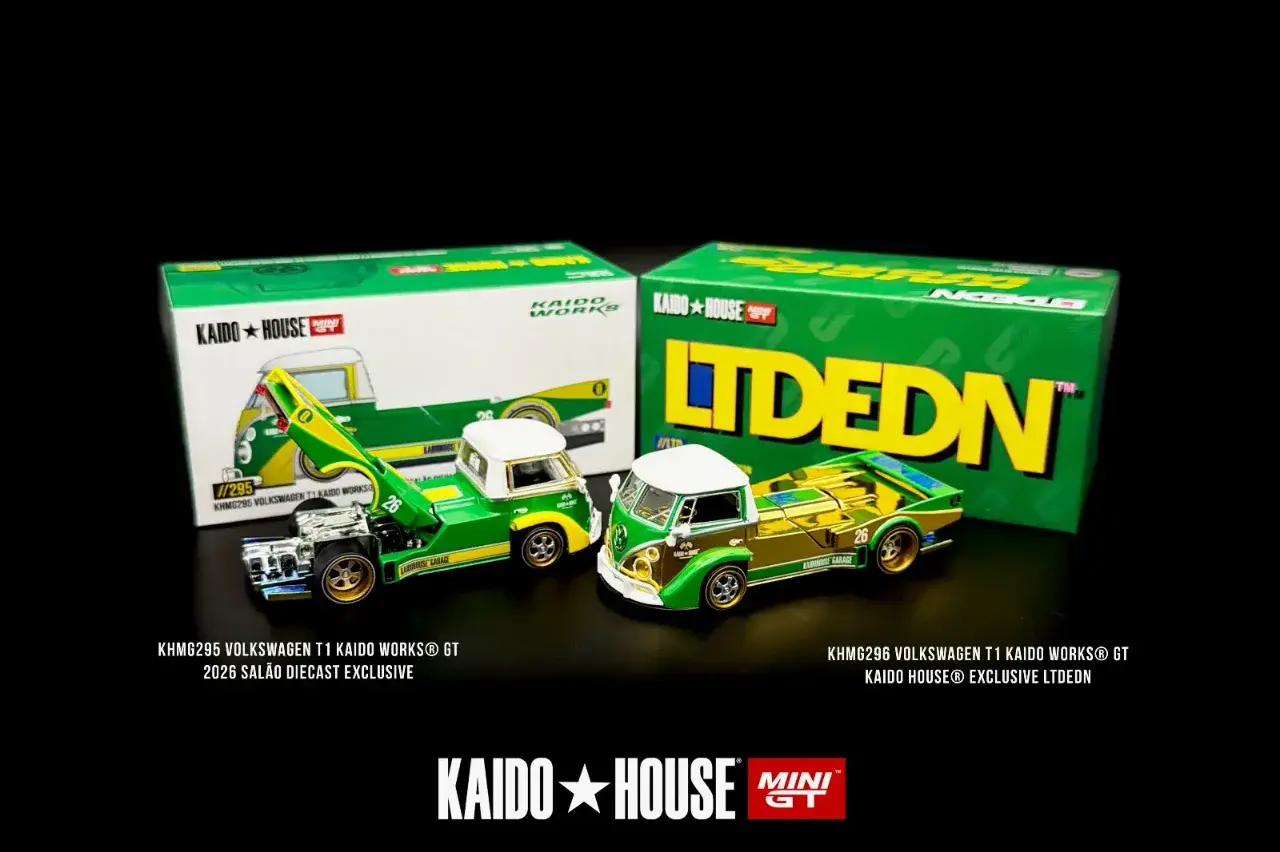
Volkswagen T1 Kaido Works GT 2026 Salão Diecast Exclusive
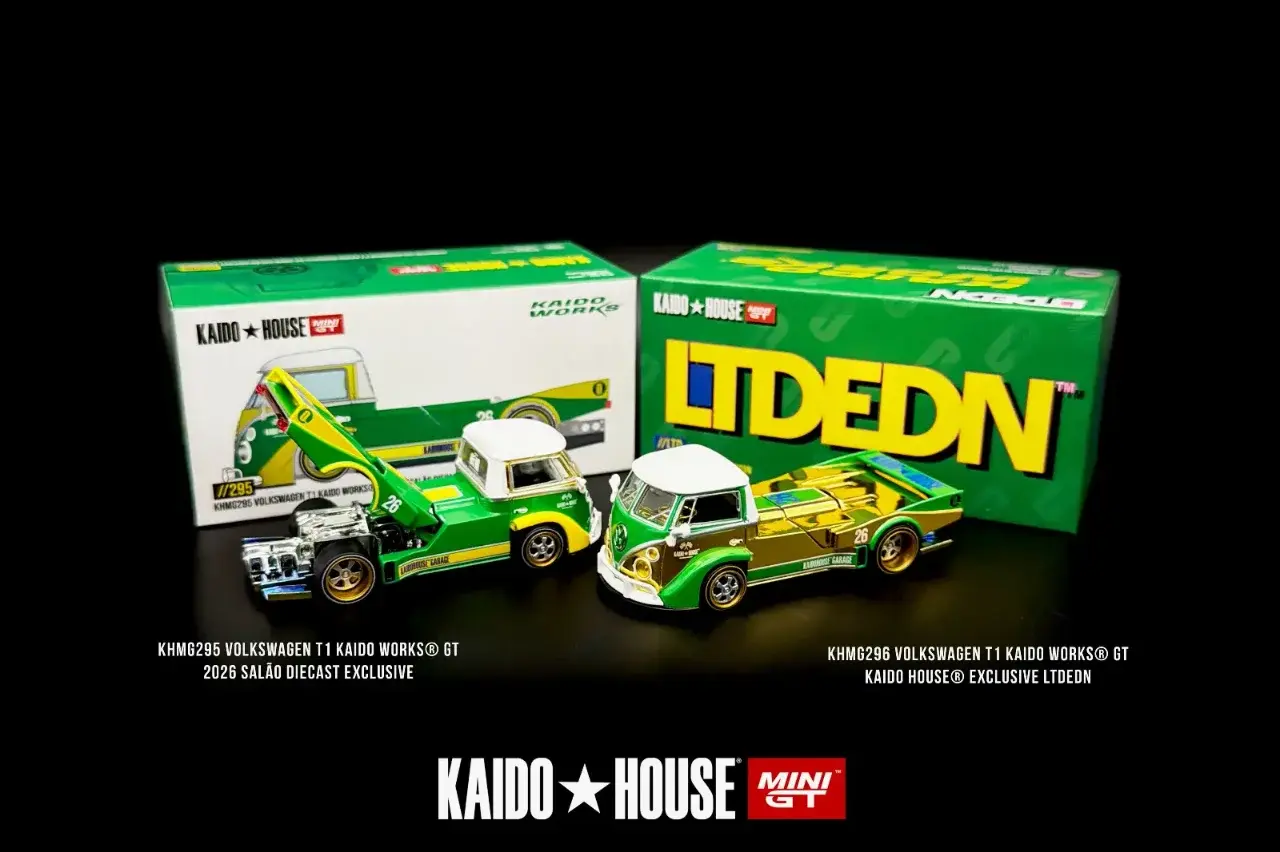
Volkswagen T1 Kaido Works GT 2026 Salão Diecast Exclusive LTDEDN